
HOW OZONE POOL SYSTEMS WORK AND WHY THEY'RE WORTH CONSIDERING
By Achtwoo Pool | Professional Pool Cleaning Services | Orange, Texas | Southeast Texas | Southwest Louisiana
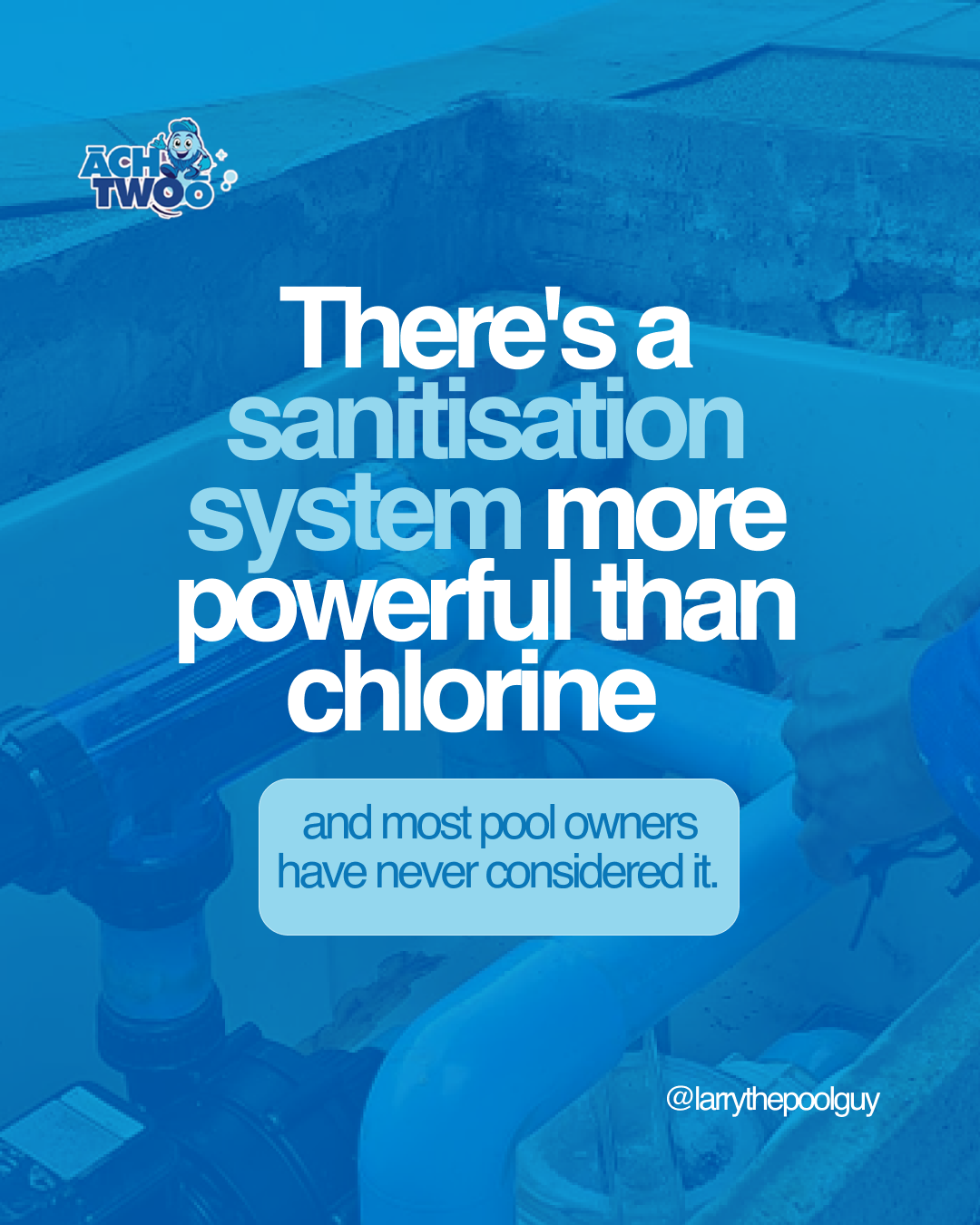
Most pool owners spend years locked in the same relationship with chlorine. Test, dose, shock, repeat, and put up with the smell, the stinging eyes, and the chemical bill that never quite goes down. What almost none of them realize is that there is a sanitizing tool more powerful than chlorine sitting in the background of the industry, and it has been quietly running on high-end pools for years. Here is what an ozone system actually does, why it works, and why it may be one of the smartest upgrades available for the way people swim in Southeast Texas.
TABLE OF CONTENTS
THE SANITIZER MOST POOL OWNERS HAVE NEVER CONSIDERED
WHAT OZONE ACTUALLY DOES IN YOUR POOL WATER
WHY OZONE OUTPERFORMS CHLORINE ON OXIDATION
THE CHLORAMINE PROBLEM OZONE SOLVES AT THE SOURCE
WHY OZONE POOLS NEED FAR LESS SHOCKING
WHY OZONE DOESN'T REPLACE CHLORINE ENTIRELY
WHAT SWIMMERS ACTUALLY NOTICE THE FIRST TIME
WHO BENEFITS MOST FROM AN OZONE SYSTEM
WANT CLEANER, LOWER-CHEMICAL WATER?
THE SANITIZER MOST POOL OWNERS HAVE NEVER CONSIDERED
Ask a typical pool owner how they keep their water clean and the answer is always the same word: chlorine. Chlorine is the default, and for good reason, it works. But treating chlorine as the only option is a little like assuming the only way to cool a house is to open a window. It works, but it is not the most powerful tool available, and it is not the tool the most demanding pools rely on.
Ozone is that more powerful tool. It is one of the strongest oxidizers available for pool water, and it has been used on commercial and high-bather-load pools precisely because it handles a job chlorine struggles to keep up with. Most residential owners have simply never had it explained to them, so they have never considered it. Once you understand what it does, it is hard to unsee the gap it fills.
WHAT OZONE ACTUALLY DOES IN YOUR POOL WATER
An ozone system injects ozone gas directly into your pool water as it circulates. Ozone is an unstable, highly reactive form of oxygen, and that instability is exactly what makes it useful. When it meets bacteria and organic contaminants in your water, it attacks them aggressively, killing pathogens and breaking down the organic load far more effectively than chlorine acting alone.
Think of it as a dedicated heavy-lifter working inside your circulation. As water passes through the system, the ozone oxidizes the contaminants it contacts, then reverts back to ordinary oxygen. It does its work in the water and does not linger as a residual the way chlorine does, which is a feature, not a shortcoming, and it is central to understanding how the two are meant to work together rather than compete.
WHY OZONE OUTPERFORMS CHLORINE ON OXIDATION
The reason ozone is worth the conversation comes down to raw oxidizing power. Chlorine is a capable sanitizer, but it is a relatively modest oxidizer, and in a pool it is asked to do both jobs at once. It has to kill living contaminants and burn off the constant stream of organic material that swimmers, weather, and the environment introduce. That second job is what quietly drains your chlorine and drives your chemical spend.
Ozone is far stronger at that oxidation work. It destroys organic contaminants that chlorine would have to grind through slowly, and it does so continuously as the water circulates. The practical result is that the heavy oxidation load, the part that normally eats through your sanitizer, gets handled by a tool built for it, instead of being dumped entirely onto chlorine that was never the most efficient choice for the task.
THE CHLORAMINE PROBLEM OZONE SOLVES AT THE SOURCE
Here is where ozone earns its keep in a way swimmers feel directly. That sharp, unmistakable pool smell that most people assume is chlorine is not clean chlorine at all. It is chloramines, the compounds that form when chlorine combines with the organic contaminants it is fighting. Chloramines are what sting your eyes, irritate your skin, and hang in the air around a heavily used pool. Ironically, that smell is a sign of chlorine being overworked, not a sign of a clean pool.
Ozone breaks chloramines down. Because it continuously oxidizes the organic load that would otherwise combine with chlorine to form them, an ozone-equipped pool produces far fewer of the compounds responsible for the odor and the irritation. The familiar pool smell fades, the eye sting eases, and the water stops announcing itself the moment you walk up to it. For anyone who has ever climbed out of a pool with red eyes and skin that smells like a chemistry set, this alone is a compelling reason to look closer.
WHY OZONE POOLS NEED FAR LESS SHOCKING
Shocking a pool is how owners deal with the built-up organic load and chloramines that regular chlorination cannot keep up with. It is effective, but it is also a recurring cost in both product and effort, and in a busy pool it comes around often.
An ozone system changes that math. Because ozone is continuously oxidizing the organic load that would otherwise accumulate and demand a shock treatment, pools with ozone need to be shocked significantly less often. The contaminants that would have piled up between service visits are being handled in real time. Less chlorine demand means lower chemical costs, and it means more stable water chemistry between visits rather than the sawtooth pattern of drifting out of balance and shocking back into it. A pool that is not constantly being pushed to its limit is a pool that behaves predictably, and predictability is worth a great deal to anyone tired of chasing their water.
WHY OZONE DOESN'T REPLACE CHLORINE ENTIRELY
It is important to be honest about what ozone does not do, because overselling it does no one any favors. Ozone does not eliminate the need for chlorine. It does its work as the water passes through the system and does not leave a lasting residual behind in the pool, which means it cannot provide the ongoing, everywhere-at-once protection that a chlorine residual gives you in the water between circulation passes.
So a properly run ozone pool still maintains a chlorine level. What changes is how much chlorine it needs. With ozone handling the heavy oxidation work that normally depletes most of your sanitizer, the chlorine you do carry lasts longer and works better, because it is no longer being burned up fighting the organic load. The two are partners. Ozone takes the demanding oxidation job, and chlorine provides the steady residual protection, and together they hold cleaner water with less strain on either one.
WHAT SWIMMERS ACTUALLY NOTICE THE FIRST TIME
Chemistry aside, the most persuasive argument for ozone is the one you do not have to explain. People notice the water. It looks noticeably clearer, it feels softer against the skin, and it carries far less of that chemical smell that clings to hair and swimsuits. The difference is not subtle and it is not something owners have to be talked into. Swimmers feel it the first time they get in.
That immediate, sensory difference is why ozone tends to win people over faster than any spec sheet could. You can describe oxidation potential all day, but the moment someone swims in ozone-treated water and climbs out without stinging eyes or a chemical film, the value explains itself.
WHO BENEFITS MOST FROM AN OZONE SYSTEM
Every pool can benefit from ozone, but the pools that benefit most are the ones under the heaviest load. If your pool sees a lot of swimmers, hosts frequent gatherings, or serves a big active family through a long Southeast Texas swim season, your organic load is high and your chlorine is constantly under pressure. That is precisely the situation ozone was built for.
For a heavily used pool, an ozone system is one of the highest-impact upgrades available. It attacks the exact problem that makes a busy pool hard to keep clean, the relentless organic load, and it does so continuously and efficiently. The result is cleaner water, lower chemical costs, less shocking, and a swimming experience people actually prefer. For the right pool, that is not a luxury add-on. It is a genuinely smart investment in how the pool performs every day it is used.
WANT CLEANER, LOWER-CHEMICAL WATER?
Deciding whether an ozone system is right for your pool is exactly the kind of question worth talking through with people who install and service them, not guessing at from a product page. At Achtwoo Pool, our team across Orange, Texas, Southeast Texas, and Southwest Louisiana can look at how your pool is actually used, what your chemistry is doing, and whether ozone would meaningfully improve your water and lower your ongoing costs.
Interested in upgrading to an ozone system for cleaner, lower-chemical water? Let's talk about whether it fits your pool.
WE SERVE ORANGE, TEXAS | SOUTHEAST TEXAS | SOUTHWEST LOUISIANA
ORANGE, TEXAS; Call: +1 409-734-7665
BEAUMONT, TX; Call: 409-734-POOL
LAKE CHARLES, LA; Call: 337-333-POOL
Visit www.409pool.com or click the link in our bio.