
WHY SALTWATER POOL CORROSION IS SILENTLY DESTROYING YOUR EQUIPMENT
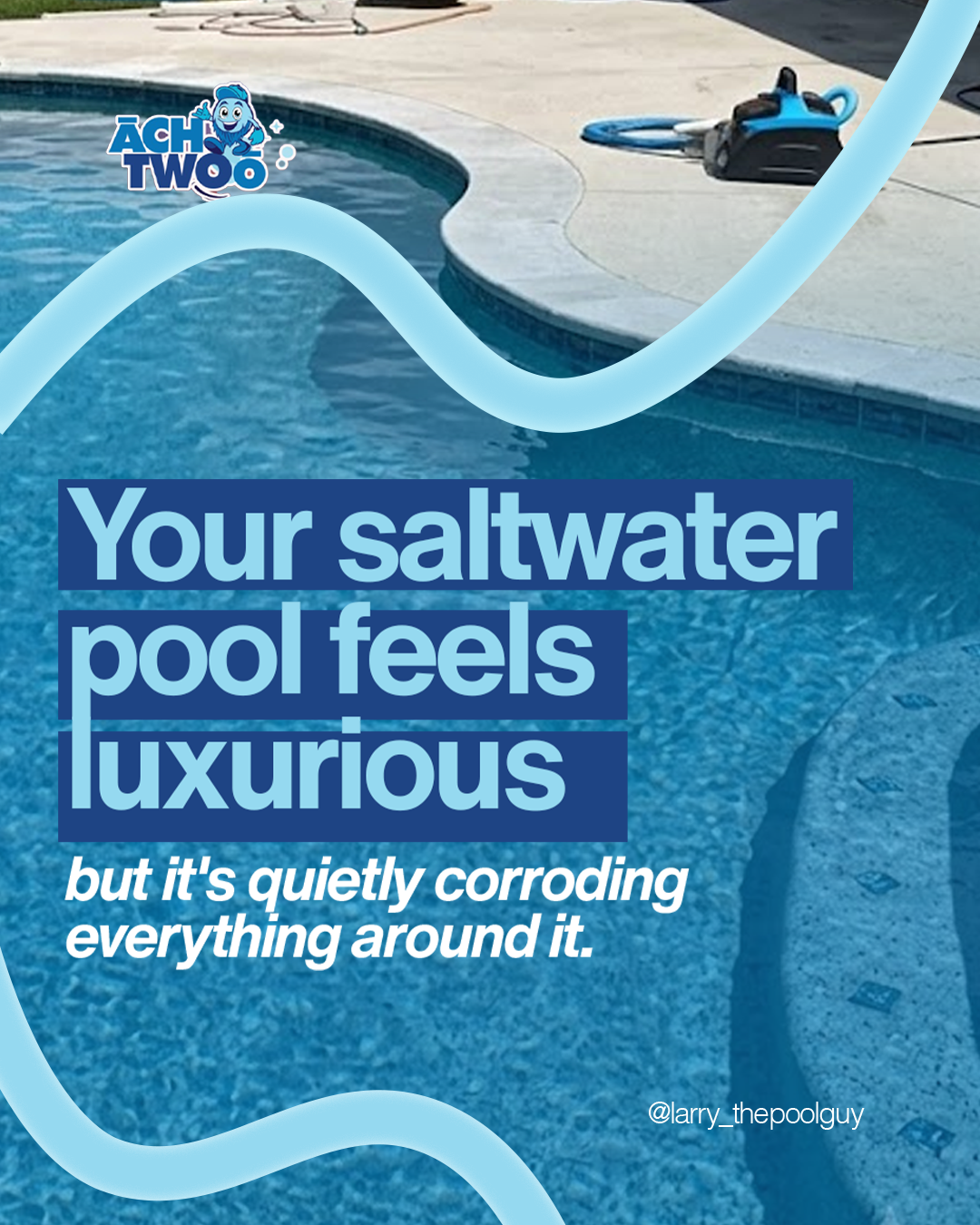
Your saltwater pool feels luxurious. But if you're not paying attention, it could be quietly eating away at the very equipment that keeps it running.
By AchtWoo Pool | Professional Pool Cleaning Services | Orange, Texas | Southeast Texas | Southwest Louisiana
TABLE OF CONTENTS
1. WHY SALTWATER POOLS AREN'T MAINTENANCE-FREE
2. HOW CORROSION SILENTLY DAMAGES YOUR POOL EQUIPMENT
3. WHAT CAUSES SALTWATER CORROSION TO HAPPEN FASTER
4. THE SIMPLE DEVICE THAT CAN SAVE THOUSANDS IN REPAIRS
5. HOW TO PREVENT CORROSION BEFORE IT STARTS
6. WARNING SIGNS YOUR POOL MAY ALREADY BE CORRODING
7. COMMON MISTAKES SALTWATER POOL OWNERS MAKE
8. WHY REGULAR INSPECTIONS MATTER MORE THAN YOU THINK
9. PROTECT YOUR INVESTMENT BEFORE IT'S TOO LATE
10. NEED HELP WITH YOUR SALTWATER POOL?
WHY SALTWATER POOLS AREN'T MAINTENANCE-FREE
One of the biggest reasons homeowners choose a saltwater pool is because they believe it requires very little maintenance.
It's easy to see why.
The water feels softer on your skin. There's no overwhelming chlorine smell. Your eyes don't burn after a swim, and the overall experience feels more luxurious than a traditional chlorine pool.
Many pool owners assume that because the water feels gentler, it's also gentler on the equipment.
Unfortunately, that's where many expensive problems begin.
A homeowner once noticed small rust stains forming around the stainless-steel handrail of his pool. He ignored them because the pool looked crystal clear and everything seemed to be working perfectly.
A few months later, those tiny stains turned into corroded fittings, damaged light fixtures, worn pump components, and an expensive repair bill that could have been avoided with a few simple preventative steps.
The truth is that corrosion doesn't happen overnight.
It works quietly.
By the time most people notice it, the damage has already spread throughout the pool system.
HOW CORROSION SILENTLY DAMAGES YOUR POOL EQUIPMENT
Saltwater itself isn't the enemy.
The real problem is how salt interacts with metal surfaces over time, especially when water chemistry isn't properly maintained.
Corrosion begins on the surface but slowly works its way deeper into metal components.
Some of the first pieces of equipment to suffer include:
Pool lights
Stainless-steel ladders and handrails
Pump housings and internal components
Filter assemblies
Skimmers
Heater components
Metal fittings and fasteners
Because corrosion starts gradually, many homeowners mistake the early signs for simple discoloration or normal wear.
What begins as a few small rust spots can eventually weaken structural components, create leaks, reduce equipment efficiency, and shorten the lifespan of expensive pool equipment.
In many cases, replacing damaged equipment costs hundreds or even thousands of dollars.
That's why preventing corrosion is always less expensive than repairing it.
WHAT CAUSES SALTWATER CORROSION TO HAPPEN FASTER
While all saltwater pools have the potential for corrosion, certain conditions dramatically speed up the process.
The first is excessive salinity.
Many homeowners believe adding extra salt will improve the performance of their salt chlorine generator.
Instead, high salt concentrations increase the corrosive environment surrounding metal equipment.
The second major factor is low pH.
When pH drops below the recommended range, the water becomes more aggressive and begins attacking exposed metals much more quickly.
Finally, different metals touching each other within the same pool system can create galvanic corrosion.
This electrochemical reaction causes one metal to deteriorate faster than the other.
Even if only one of these conditions exists, corrosion can begin.
When two or three occur together, the damage accelerates significantly.
The unfortunate part is that none of this is immediately visible.
Everything may appear perfectly normal while corrosion is actively destroying expensive equipment behind the scenes.
THE SIMPLE DEVICE THAT CAN SAVE THOUSANDS IN REPAIRS
If there's one inexpensive component every saltwater pool owner should know about, it's the sacrificial anode.
Despite its unusual name, it performs an incredibly important job.
A sacrificial anode is typically made from zinc or magnesium and is bonded to your pool's equipment system.
Instead of allowing corrosion to attack your pump, heater, rails, lights, and plumbing fittings, the corrosion attacks the anode first.
In other words, the anode sacrifices itself to protect everything else.
Think of it as a lightning rod for corrosion.
Rather than allowing valuable equipment to deteriorate, the anode absorbs the damage.
Eventually, the anode itself will wear out and need replacement.
Fortunately, replacing an anode is far less expensive than replacing pumps, heaters, lighting systems, or plumbing components.
It's one of the simplest investments you can make to extend the life of your pool equipment.
HOW TO PREVENT CORROSION BEFORE IT STARTS
The best way to deal with corrosion is to prevent it from happening at all.
Start by maintaining balanced water chemistry throughout the swimming season.
One of the most important numbers to monitor is pH.
Keeping your pH consistently between 7.4 and 7.6 helps create an environment that's comfortable for swimmers while also protecting metal equipment from unnecessary corrosion.
Regular water testing allows you to catch small chemical changes before they become expensive equipment problems.
It's also a good habit to rinse exposed metal surfaces around your pool with fresh water every week.
Salt residue often collects on handrails, ladders, light fixtures, and other metal components.
A quick rinse removes that buildup before it has the opportunity to begin damaging the surface.
These small maintenance habits require only a few minutes but can add years to the lifespan of your equipment.
WARNING SIGNS YOUR POOL MAY ALREADY BE CORRODING
Corrosion rarely announces itself with dramatic failures.
Instead, it leaves subtle clues.
Watch for:
Rust stains around metal fittings
Discoloration on stainless-steel rails
Pitting or rough spots on metal surfaces
White mineral buildup surrounding equipment
Small leaks around pumps or plumbing connections
Loose or weakened hardware
Reduced equipment performance
These warning signs shouldn't be ignored.
Addressing corrosion early is almost always easier and less expensive than waiting until equipment fails completely.
Routine inspections help identify problems before they become emergencies.
COMMON MISTAKES SALTWATER POOL OWNERS MAKE
Many corrosion problems are completely preventable.
Unfortunately, homeowners often make a few common mistakes.
Some assume the salt system manages every aspect of water chemistry.
Others rarely test pH because the water looks clear.
Some never inspect metal components until rust becomes obvious.
Others overlook the importance of installing a sacrificial anode altogether.
Clear water doesn't always mean healthy water.
Likewise, equipment that appears fine on the outside may already be experiencing internal corrosion.
Regular maintenance isn't just about keeping your pool beautiful.
It's about protecting every piece of equipment connected to it.
WHY REGULAR INSPECTIONS MATTER MORE THAN YOU THINK
Professional pool inspections do far more than test chlorine levels.
An experienced technician can identify early corrosion, inspect bonding systems, verify water balance, evaluate salt concentrations, and detect small issues before they become expensive repairs.
Many homeowners don't realize there's a problem until the pump fails, the heater leaks, or the lighting system stops working.
By then, corrosion has often been active for months or even years.
Annual inspections provide peace of mind while helping protect one of the biggest investments in your backyard.
PROTECT YOUR INVESTMENT BEFORE IT'S TOO LATE
A saltwater pool should be a source of relaxation, not unexpected repair bills.
The good news is that corrosion is largely preventable.
Maintaining proper pH, monitoring salinity, rinsing metal surfaces regularly, installing a sacrificial anode, and scheduling routine inspections all work together to protect your equipment for years to come.
A few minutes of preventive maintenance today can save thousands of dollars tomorrow.
Remember, corrosion is silent.
The sooner you stop it, the longer your pool equipment will last.
NEED HELP WITH YOUR SALTWATER POOL?
If you've noticed rust stains, corroded fittings, damaged equipment, or you're simply unsure whether your saltwater pool is properly protected, our experienced team is here to help.
We proudly serve Orange, Texas, Southeast Texas, and Southwest Louisiana, providing professional pool inspections, water balancing, equipment maintenance, and expert solutions that keep your pool operating safely and efficiently.
Orange, Texas: +1 409-734-7665
Beaumont: 409-734-POOL
Lake Charles: 337-333-POOL
Visit www.409pool.com or click the link in our bio to schedule your professional pool service today.