
WHY YOUR HAIR TURNS GREEN IN THE POOL AND HOW TO PREVENT IT
By Achtwoo Pool | Professional Pool Cleaning Services | Orange, Texas | Southeast Texas | Southwest Louisiana
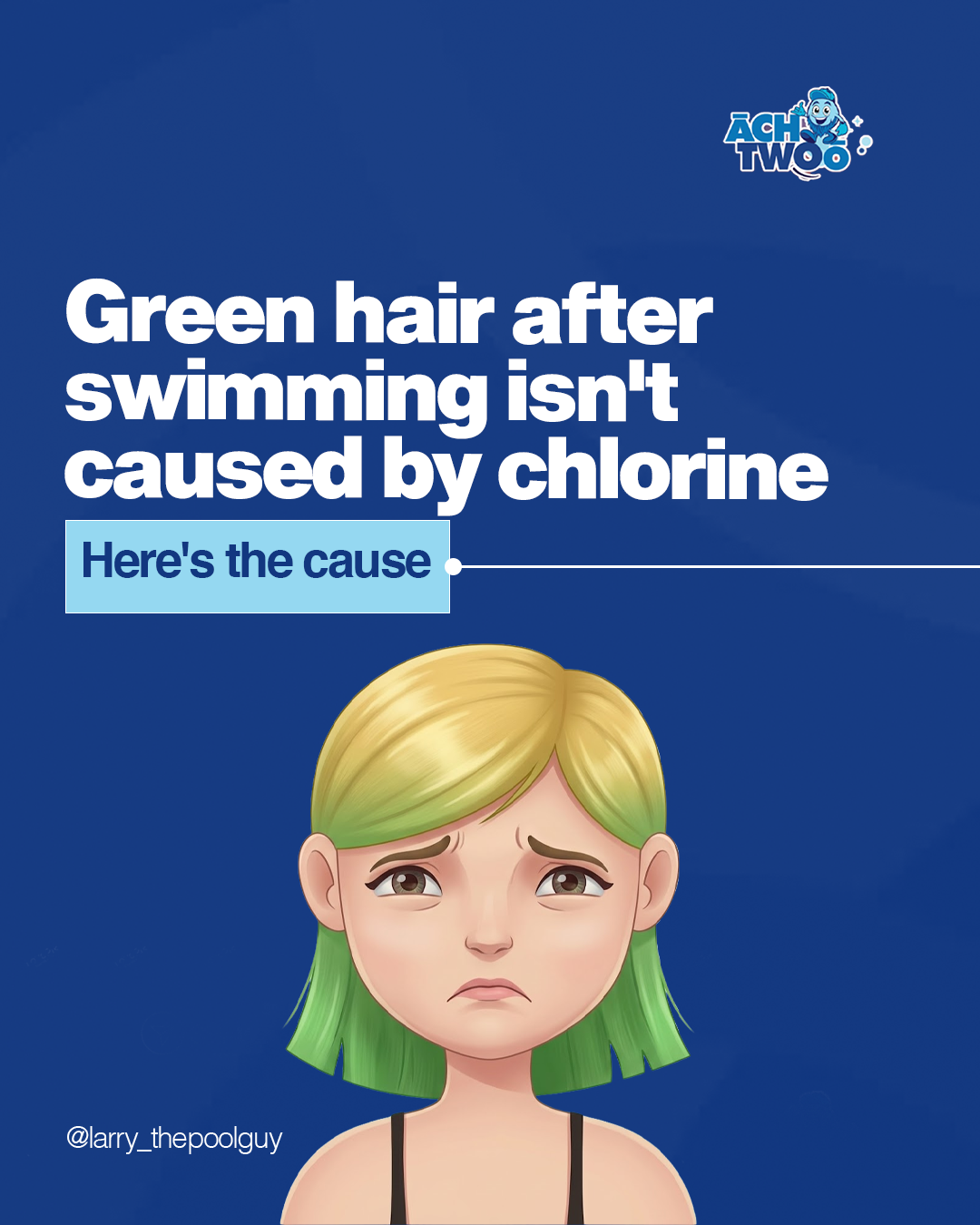
Green hair after swimming isn't caused by chlorine. It never was. The real culprit has been in your pool water all along and until you address it at the source, no shampoo, no conditioning treatment, and no amount of rinsing after swimming will stop it from happening again.
Table of Contents
The Chlorine Myth That Has Been Misleading Swimmers for Decades
What Actually Causes Green Hair After Swimming
Where Copper Comes From in Pool Water
Source One: Copper-Based Algaecides
Source Two: Copper Ionisers
Source Three: Corroding Pipes and Heat Exchangers
How pH Creates or Prevents Copper Corrosion in Your System
How to Fix Green Hair That Has Already Happened
Testing for Copper: Why Standard Test Kits Miss the Problem
How to Remove Copper From Pool Water
The Long-Term Prevention Approach
Swimmers Coming Out With Green Hair or Skin Irritation?
The Chlorine Myth That Has Been Misleading Swimmers for Decades
She had been a competitive swimmer for years and had accepted green-tinted hair as part of the summer experience. Everyone she knew who swam regularly had heard the same explanation: the chlorine does it. It was repeated so consistently, by so many people, with such confidence, that it had become one of those pool facts that no one questions because everyone already knows it.
The problem is that it's wrong. Chlorine does not turn hair green. It has never turned hair green. The explanation is wrong, it has always been wrong, and the reason it persists is that the correct explanation requires knowing something about pool chemistry that most pool owners and most swimmers have never been taught.
The discovery that changed her thinking came during a pool service consultation when the actual cause was explained: copper, not chlorine. Dissolved copper in pool water oxidises on contact with hair protein and produces a greenish compound that bonds directly to the hair shaft. The chlorine in the water is not the cause, in fact, chlorine's role in the process is to oxidise the copper, converting it from a dissolved form to a reactive one that bonds more readily with hair.
Chlorine is the trigger. Copper is the culprit.
That distinction matters because it determines whether any corrective action you take addresses the actual problem or simply works around a cause that is still present and will produce the same result every time.
What Actually Causes Green Hair After Swimming
When copper is dissolved in pool water, it exists primarily as copper ions; copper in a chemically reactive, dissolved form. In this state, copper doesn't immediately bond with hair. When free chlorine contacts dissolved copper ions, it oxidises them converting them to copper oxide, a compound with a strong affinity for the keratin protein that makes up the structure of human hair.
Copper oxide bonds directly to the hair shaft through a chemical reaction with the hair's protein structure. The resulting compound produces the characteristic greenish-brown discolouration most visible in light-coloured and chemically treated hair which is why blonde swimmers and those with colour-treated hair experience the most dramatic colour change. Darker hair contains more pigment that masks the copper discolouration, but the same bonding is occurring regardless of hair colour.
The process happens most rapidly when copper levels in the pool water are elevated and when the water pH is in a range that makes copper particularly reactive. Understanding both of these factors is what makes the prevention approach effective rather than simply symptomatic.
Where Copper Comes From in Pool Water
Copper doesn't belong in pool water in meaningful concentrations. When it is present, it arrived through one of three pathways, each of which requires a different response once identified.
Source One: Copper-Based Algaecides
Copper sulphate-based algaecides are among the oldest and most widely used algae-prevention products in pool maintenance. They work by introducing copper ions into the water at concentrations that are toxic to algae but theoretically safe for swimmers. The problem is that those same copper ions are precisely the form of copper that causes green hair when oxidised by pool chlorine.
Every application of a copper-based algaecide raises the copper concentration in the pool water. Over a season of regular applications, the cumulative copper level can rise to concentrations that produce reliable green hair discolouration after every swim particularly in swimmers with light or chemically treated hair.
This is one of the most common and most straightforwardly preventable sources of pool copper contamination. The algaecide is being added with the intention of maintaining water quality, while simultaneously introducing the compound responsible for one of the most visible and frustrating side effects of pool use.
The solution is a simple product substitution. Polymer-based algaecides, specifically polyquat-60 formulations provide equivalent or superior algae prevention without introducing any copper into the water. They have no metal content, no foaming issues when used correctly, and no green hair side effects. For pool owners who have been using copper-based algaecides as a regular part of their maintenance routine, switching to a polymer-based alternative immediately removes one of the most common copper sources.
Source Two: Copper Ionisers
Copper ionisers are devices that introduce copper and silver ions into pool water as an alternative or supplement to chlorine-based sanitisation. The theory is that the antimicrobial properties of these metals reduce the chlorine required to maintain safe water.
In practice, ionisers introduce the same copper ions into the water that cause green hair discolouration and they do so continuously as long as the device is operating. Pools using copper ioniser systems often have elevated copper levels as a built-in feature of the sanitisation approach, which means the green hair risk is structural rather than incidental.
Pool owners using ioniser systems who experience green hair issues should have their copper levels tested and consider whether the ioniser settings need adjustment or whether an alternative sanitisation approach would better serve the pool's users.
Source Three: Corroding Pipes and Heat Exchangers
The third source of pool copper is the most insidious because it requires no deliberate chemical addition and produces no obvious visible sign until the symptoms appear in swimmers' hair or in water test results.
Pool heating systems that use copper heat exchangers, common in many residential pool heaters, release copper into the water when the heater components corrode. Similarly, older pool plumbing systems with copper fittings or copper pipe sections leach copper into the water through oxidative corrosion of the metal surfaces.
The rate of this corrosion is directly influenced by water pH. Water with low pH below 7.2 is chemically aggressive toward copper surfaces. It accelerates the corrosive reaction that dissolves copper from fittings, pipes, and heat exchangers into the pool water. A pool that consistently runs at a low pH is continuously extracting copper from its own plumbing and equipment, introducing a copper source that will persist as long as the pH problem and the copper-containing components both remain.
How pH Creates or Prevents Copper Corrosion in Your System
The relationship between pH and copper corrosion in pool systems is not widely understood by pool owners who manage their pH primarily for chlorine effectiveness and swimmer comfort but it is one of the most important reasons to maintain pH in the 7.4 to 7.6 range consistently.
At pH 7.4 to 7.6, the water is in a chemical state that is neither aggressive toward metal surfaces nor excessively alkaline. Copper fittings and heat exchangers in contact with water in this range corrode at a low, manageable rate that does not produce meaningful copper accumulation in the water over a normal pool season.
At pH below 7.2, the water becomes progressively more aggressive toward metal. The corrosion rate of copper surfaces increases significantly. The same heat exchanger or copper fitting that contributes negligible copper at correct pH becomes a meaningful copper source at low pH continuously releasing copper into the water with every hour that the pH remains outside the correct range.
Maintaining pH correctly doesn't just protect swimmer comfort and chlorine effectiveness. It protects the pool's own equipment from becoming a copper source that causes the water quality and swimmer experience problems described in this article.
How to Fix Green Hair That Has Already Happened
For swimmers who are already dealing with green-tinted hair as a result of pool copper exposure, the fix requires understanding what has happened chemically and that regular shampoo is not the solution.
Regular shampoo is formulated to remove surface oil, dirt, and product buildup from hair. The green discolouration caused by copper oxide bonded to hair protein is not a surface deposit. It is a chemical bond between the copper compound and the hair's protein structure. Regular shampoo has no chemistry that addresses this bond. It will clean the hair of everything except the copper discolouration.
The correct product is a chelating shampoo specifically a swimmer's chelating or clarifying shampoo that contains compounds designed to break the copper-protein bond and allow the copper compound to be rinsed away. These products work by forming a stronger bond with the copper than the hair protein does, drawing the copper out of the hair structure and into solution where it can be rinsed away.
Apply the chelating shampoo and allow it to sit on the hair for several minutes before rinsing, to give the chelating compounds time to work through the hair structure and displace the copper bonds. Multiple applications may be needed for significant discolouration that has been present for an extended period.
Testing for Copper: Why Standard Test Kits Miss the Problem
The reason copper problems in pool water are consistently underdiagnosed is that standard pool test kits, the test strips and basic liquid reagent kits used for routine pool chemistry management do not test for metals. They measure chlorine, pH, alkalinity, cyanuric acid, and calcium hardness. Copper is not included.
A pool owner managing their pool with a standard test kit and seeing acceptable results across all measured parameters can have a significant copper problem in the water that their testing is entirely blind to. The problem only becomes apparent when swimmers experience green hair at which point the copper has already been present and accumulating for an unknown period.
Testing for copper requires a dedicated metal test kit available from pool supply retailers or a professional water analysis that includes a metals panel. If copper is detected above 0.2 ppm, action is required to reduce it and prevent further introduction.
How to Remove Copper From Pool Water
Once copper is confirmed in the water, the treatment approach uses a metal sequestrant, a class of pool chemical specifically designed to chemically bind dissolved metal ions and hold them in solution where they can be captured by filtration and removed from the water.
Add a metal sequestrant according to the pool volume instructions. Run the filter continuously for 24 to 48 hours after application. Clean or backwash the filter after this period to remove the metal-laden material captured during filtration. Retest copper levels after treatment and repeat if levels remain elevated.
Simultaneously address the copper source: switch from copper-based algaecides to polymer alternatives, correct pH to 7.4 to 7.6 and maintain it consistently to stop pH-driven corrosion, and have any copper-containing heating equipment inspected for corrosion if copper levels persist despite product substitution.
The Long-Term Prevention Approach
The long-term prevention of green hair from pool copper comes down to four consistent practices.
Test for metals every four to six weeks using a dedicated metal test kit. This catches copper accumulation before it reaches levels that affect swimmers. Switch all algaecide use to polymer-based products and eliminate copper-based formulations from the maintenance routine. Maintain pH consistently between 7.4 and 7.6 to protect equipment from copper-leaching corrosion. Add a maintenance dose of metal sequestrant monthly during pool season to continuously chelate and remove trace copper before it accumulates to problematic concentrations.
These four practices together eliminate the green hair problem permanently in pools where it has been a recurring issue without requiring any change to the pool structure, the sanitisation system, or the swimming routine.
Swimmers Coming Out With Green Hair or Skin Irritation?
Green hair after swimming is a solvable problem but only if it is addressed at the actual cause rather than the symptom. Chelating shampoo treats the hair. Removing copper from the water and preventing its reintroduction protects every swimmer going forward.
At Achtwoo Pool, metal testing and copper management is part of our comprehensive water chemistry service across Orange, Texas, Southeast Texas, and Southwest Louisiana because the standard test kit misses what swimmer complaints are telling us is there.
We serve Orange, Texas | Southeast Texas | Southwest Louisiana
Orange, Texas; Call: +1 409-734-7665
Beaumont, TX; Call: 409-734-POOL
Lake Charles, LA; Call: 337-333-POOL
Visit www.409pool.com or click the link in our bio.
Swimmers coming out with green hair or skin irritation? The answer is in the water. Let's test it properly and fix it at the source.